
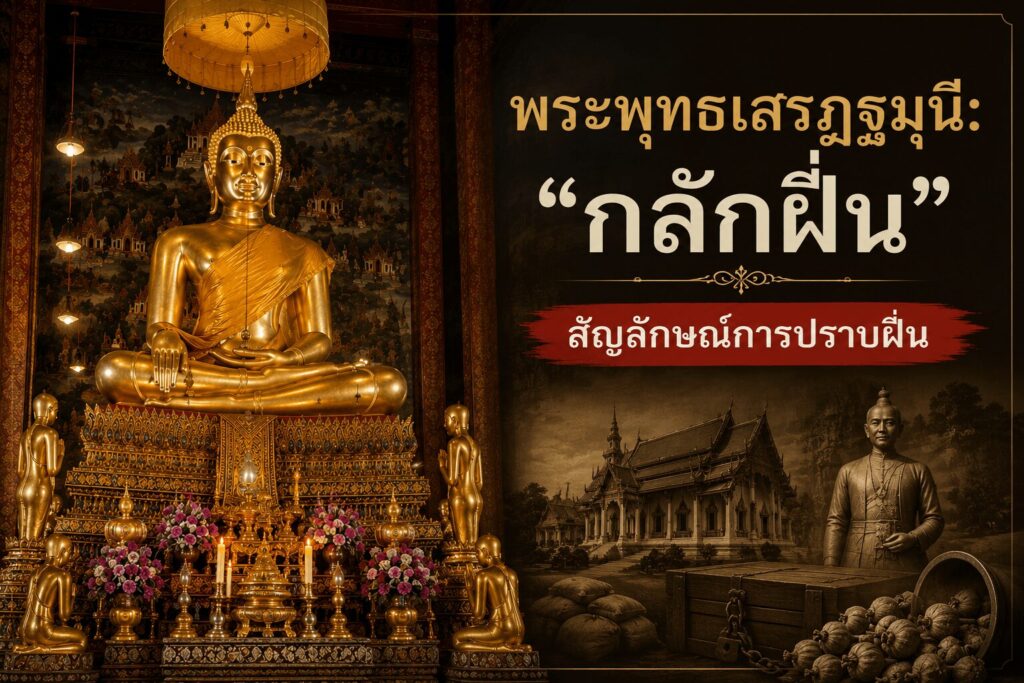
Phra Phutthaseratthamuni: The Buddha Cast from Opium Boxes — A Symbol of the War on Opium
The only Buddha image in the world cast from confiscated opium paraphernalia, created during the reign of Rama III.
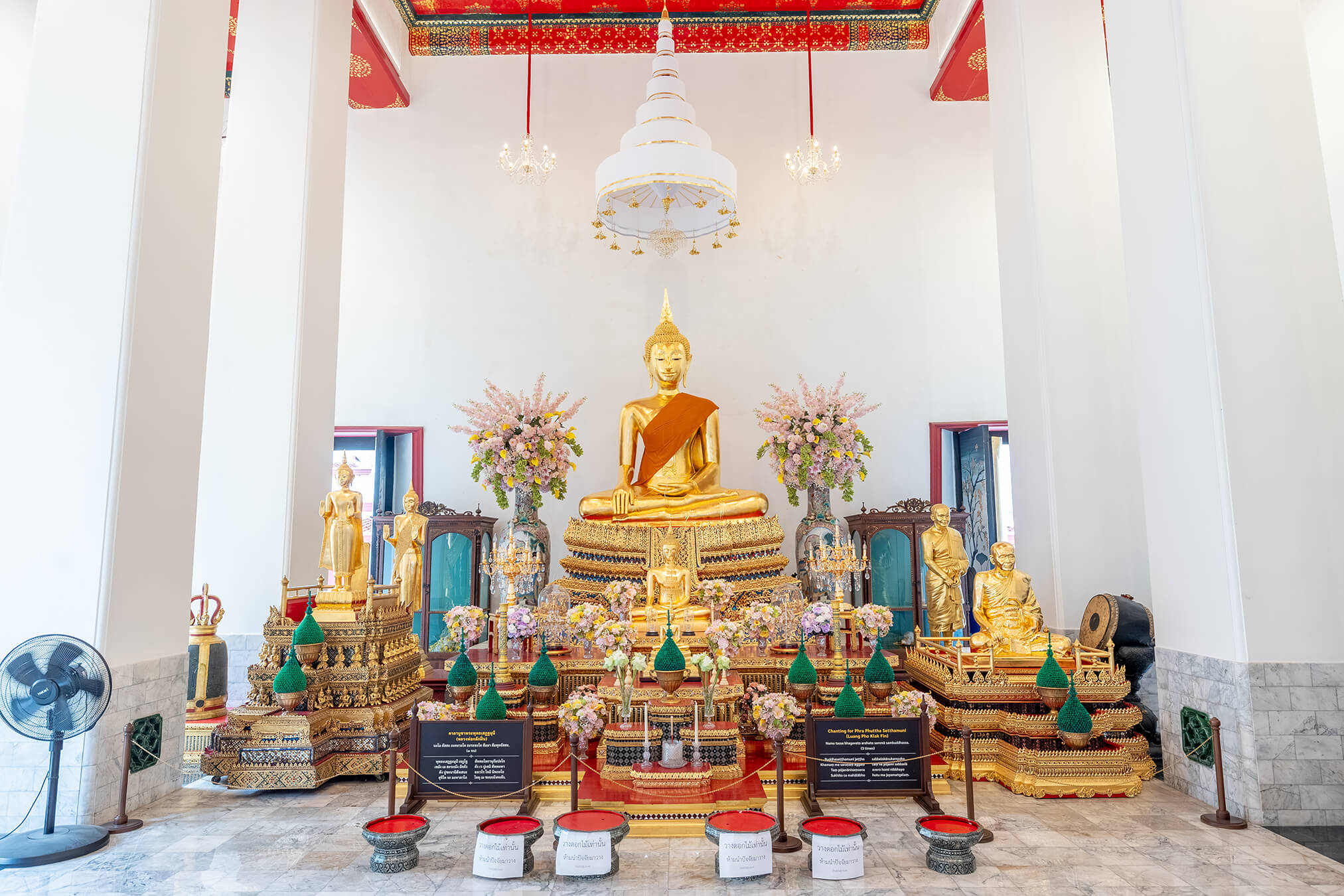
In the sermon hall (sala karn prian) of Wat Suthat Thepwararam stands a Buddha image that, at first glance, looks like any other bronze statue. But once you know its origin, the reaction is invariably one of astonishment — for this image was cast from opium boxes (klak fin) seized during the anti-opium campaign of King Rama III. Locals long knew it simply as "Phra Klak Fin" (the Opium-Box Buddha), before it was officially named "Phra Phutthaseratthamuni" — meaning "the Noble Sage Buddha."
Opium: The Scourge of Early Rattanakosin Siam
During the reign of Rama III, opium had spread alarmingly throughout Siam — particularly in port districts and Chinese communities — becoming a serious social and economic crisis. Recognising the grave harm it caused, the king enacted strict anti-opium laws. Large-scale raids, seizures, and destruction of opium supplies were carried out across the kingdom.
The paraphernalia used for smoking opium, including the metal containers known as klak fin (opium boxes), were confiscated in enormous quantities. Rather than discarding this metal as worthless, Rama III saw an opportunity: the material could be transformed into a sacred Buddha image — turning something harmful and corrupt into something holy and worthy of veneration.
Cast from Opium Boxes in 1839
On 18 April 1839, the vast collection of confiscated opium boxes was melted down at the royal foundry within the Grand Palace and cast into a Buddha image. The statue was then enshrined as the principal image at the sermon hall of Wat Suthat Thepwararam.
In that era, the image was popularly known as "Phra Klak Fin," a direct reference to the raw material used in its casting. It was later in the reign of King Rama IV that the image received its formal royal name: "Phra Phutthaseratthamuni" — "the Exalted Sage."
A Rattanakosin-Style Maravijaya Buddha
Phra Phutthaseratthamuni is a Maravijaya (subduing Mara) posture Buddha, cast in brass — the very metal of the opium boxes. Though smaller than the great images of Phra Sri Sakyamuni or Phra Phutthatrilokchet, it possesses all the refined features of a Rattanakosin-era Buddha, seated serenely at the centre of the graceful Thai-style sermon hall.
What makes this image remarkable is not its size, but the profound history embedded in its very metal. Every part of the statue was once an instrument of harm — yet it has been transformed into a lasting reminder of the power to turn something evil into something sacred.
The Only One of Its Kind in the World
Historians and Buddhist art scholars have recognised Phra Phutthaseratthamuni as "the only Buddha image in the world cast from opium paraphernalia." No other country has a recorded instance of seized drug equipment being melted down and recast as a large-scale sacred image.
The act also reflects Rama III's far-sighted vision — a symbolic declaration that Siam would not yield to the threat of opium, and that even the instruments of vice could be made to serve the highest purposes of faith and morality.
The Elegant Sermon Hall
The sermon hall that houses Phra Phutthaseratthamuni stands in the northwestern corner of the monastic quarters of Wat Suthat. It is a traditional Thai structure with a two-tiered roof of terracotta tiles and a shaded veranda running around all four sides. The interior is cool, quiet, and deeply conducive to listening to Dharma teachings, chanting, and meditation.
Visitors who step inside often describe a sense of calm and stillness. Those who learn the story of Phra Phutthaseratthamuni invariably leave with a deeper sense of wonder at the remarkable transformation concealed within the image.
A Lesson Across Time
Phra Phutthaseratthamuni is far more than another beautiful Buddha image in the temple's collection. It is a "monument of moral resolve" — bearing witness to Siam's struggle against narcotics in the early Rattanakosin era, and serving as a perpetual reminder to all Thais of the dangers of opium, intoxicants, and all forms of vice.
Today, when we gaze upon Phra Phutthaseratthamuni in the sermon hall, we sense the profound intention of its creators — not merely to provide an object of devotion, but to remind future generations that "even the most harmful of things can be transformed into something sacred, given sufficient faith and unwavering determination."